Cannabis product labels can look complicated at first because they may include cannabinoid amounts, serving sizes, ingredients, testing information, batch numbers, and required warnings all on the same package. Once you know which details matter, labels become much easier to understand — and one of the most useful tools for comparing products.
Different product formats display potency differently, so a number on one package may not mean the same thing as the same number on another. At Cannabis Maximus in Brattleboro, our team is always happy to walk through a label with you in person. Here are the main parts of a cannabis label worth checking before you buy.
1. Start With the Product Type
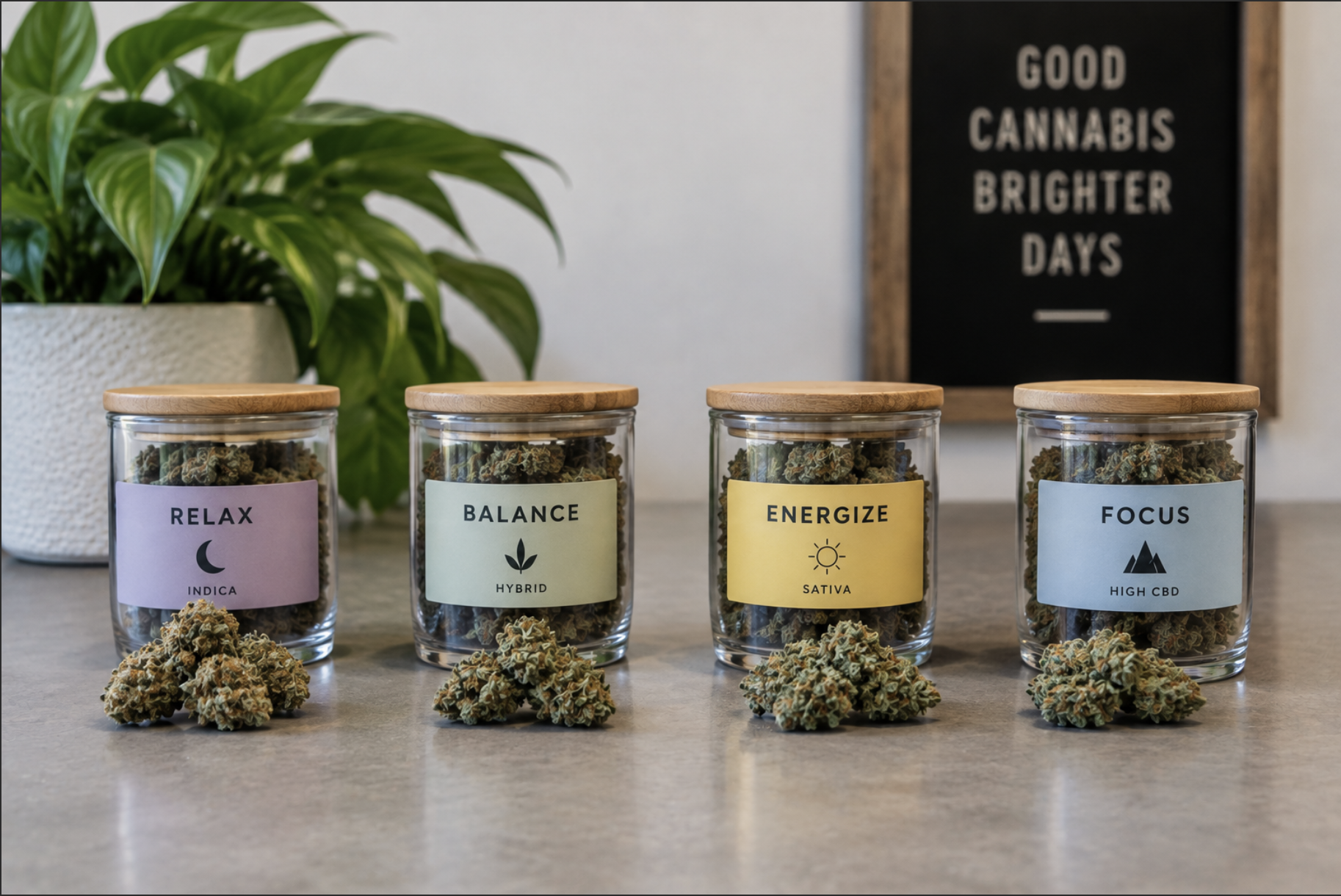
The first step is identifying what kind of cannabis product you are looking at. Common categories include flower, pre-rolls, edibles, vapes, concentrates, tinctures, and cannabis beverages.
The category matters because potency is expressed differently depending on the format. Flower often shows THC as a percentage, while edibles and beverages commonly list THC in milligrams per serving and per package. Vapes and concentrates may use percentages or other potency information depending on the product. For a broader walkthrough of each format, our Product Guide is a good starting point.
2. Understand THC, CBD, and Cannabinoid Amounts
THC is the main intoxicating cannabinoid in cannabis, while CBD is another naturally occurring cannabinoid that is not intoxicating in the same way. Some products contain mostly THC, some contain CBD, and some contain both in different ratios. Amounts may appear as percentages, milligrams, or ratios depending on the product.
You may see cannabinoid information listed as:
- THC percentage
- CBD percentage
- Milligrams per serving
- Milligrams per package
- THC:CBD ratio
- Total cannabinoid content
Percentages and milligrams are different measurements and should not be compared as if they are the same thing. A flower product showing THC as a percentage cannot be directly compared one-to-one with an edible listing THC in milligrams. For a deeper look at how these cannabinoids differ, see THC vs. CBD: What Cannabis Shoppers Should Know.
3. Serving Size vs. Total Package Potency
One of the most important distinctions on a cannabis label is the difference between a single serving and the entire package. A package can contain multiple servings even if it looks like one product, and the amount listed per serving is different from the total amount in the package. This is especially important with edibles and beverages, where the entire package should not automatically be treated as one serving.
For example, if a package contains 10 servings, the amount listed per serving and the total amount in the package are two different numbers. Check both before consuming.
Check:
- Amount per serving
- Number of servings
- Total amount per package
- Suggested serving information on the label
4. Ingredients, Allergens, and Product Formulation
Edibles, beverages, tinctures, and some vape products may include additional ingredients beyond cannabinoids. Customers with food allergies, dietary restrictions, sensitivities, or ingredient preferences should review the ingredient list carefully. For cannabis-infused foods and drinks, allergen information can be especially important.
Vape labels may also include information about extract type, formulation, or terpene source depending on the product. Because vape products can vary considerably in how they are made, checking the ingredients and product type is worth doing before purchasing.
5. Terpenes, Cultivar, and Product Details
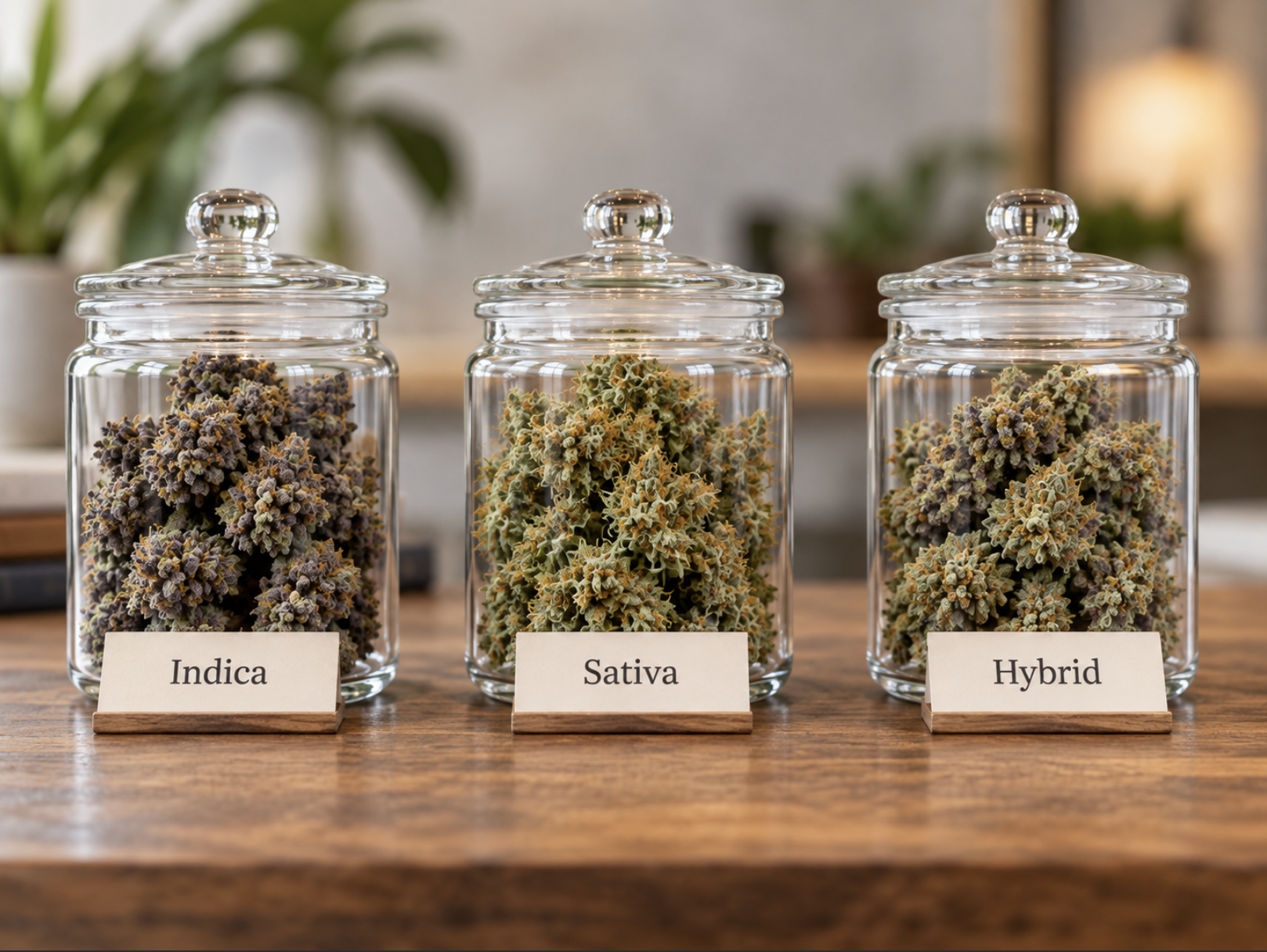
Terpenes are aromatic compounds that contribute to a product's aroma and flavor, and some labels include terpene information to help shoppers compare products beyond THC alone. Common terpenes include myrcene, limonene, pinene, caryophyllene, and linalool. Flower labels may also list the cultivar name, grower, package weight, and cannabinoid percentages.
These details can help you understand what a product will smell and taste like and how it was produced. For a fuller explanation of how terpenes shape aroma and flavor, see our cannabis terpenes guide.
6. Batch Numbers, Testing, and Required Warnings
Cannabis products may include a batch or lot number that identifies the specific production run associated with the product. Batch information is useful for product tracking, testing, and quality control, and it is a standard part of legal cannabis packaging even if you do not use it every time you shop.
Testing and compliance information may also appear on the package, including details related to potency testing, contaminant testing, laboratory results, or production batches. Labels may also include required warning statements, such as adult-use restrictions, impairment warnings, keep-away-from-children statements, or product-specific caution language. These warnings should be read rather than ignored.
7. What Changes by Product Format?
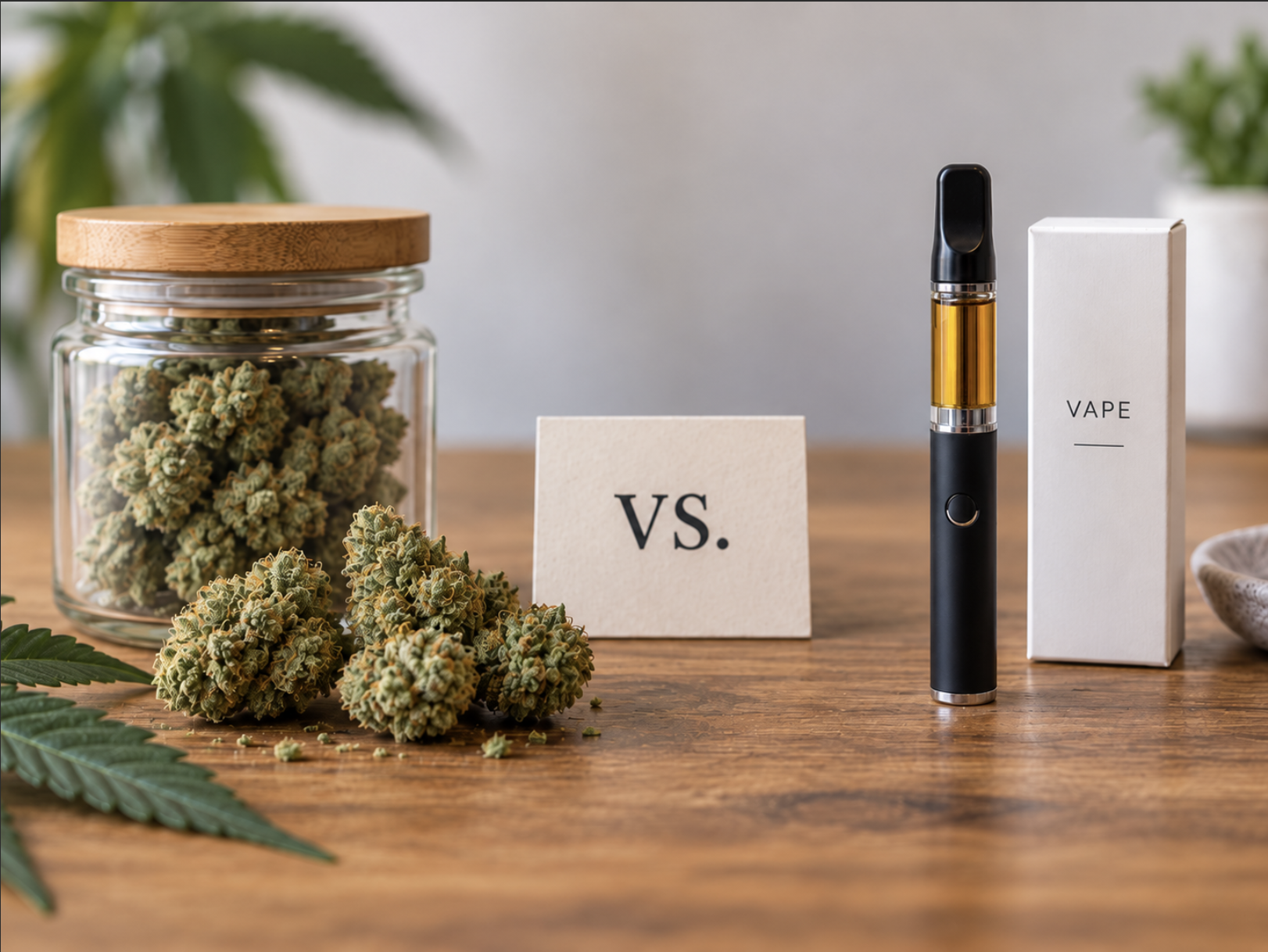
While the core details above appear on most cannabis labels, the emphasis shifts depending on the product type. Here is a quick comparison of what each format commonly highlights.
Flower and Pre-Rolls
Labels may commonly emphasize THC/CBD percentage, cultivar, grower, package weight, terpenes, and batch information.
Edibles and Beverages
Labels may commonly emphasize THC/CBD per serving, total package potency, number of servings, ingredients, allergens, and required warnings.
Vapes and Concentrates
Labels may commonly emphasize cannabinoid concentration, extract type, ingredients or formulation, package size, terpenes, and batch or testing information. Concentrates can contain much higher cannabinoid concentrations than flower, so potency is especially important to review.
The Biggest Mistake: Shopping by THC Alone
One of the most common mistakes cannabis shoppers make is choosing a product based only on the highest THC number. THC matters, but it is only one part of a product, and higher potency does not automatically mean higher quality or a better fit for every person.
When comparing products, also consider product format, CBD content, serving size, terpenes, ingredients, brand or grower, personal tolerance, and previous experience. The strongest product on the shelf is not automatically the best choice for every shopper.
Questions Worth Asking
You do not need to understand every number or abbreviation before visiting a dispensary. If something on a label is unclear, ask. Helpful questions include:
- How much THC is in one serving?
- Is this amount per serving or per package?
- Does this product contain CBD?
- How many servings are in the package?
- What type of extract is this?
- What are the main terpenes?
- Is there anything important on this label I should understand before choosing it?
Shop Cannabis in Brattleboro
Cannabis Maximus is a family-owned recreational and medical cannabis dispensary in Brattleboro, Vermont. Our team can help explain product labels, potency, serving sizes, cannabinoids, terpenes, and product formats so you can better understand what you are buying.
Browse our current menu before your visit, explore our Product Guide, or check our Location & Hours to plan your stop.
Cannabis Maximus — Brattleboro, Vermont.
For adults 21+. Please consume responsibly. Cannabis affects everyone differently. Do not drive or operate a vehicle while impaired.