If you have looked at a cannabis menu or product label, you have probably seen the abbreviations THC and CBD. They are two of the best-known cannabinoids found in cannabis, and while they often appear together, they are different in important ways.
Understanding the basic distinction between THC and CBD can make it easier to compare products without focusing on a single number. Product choice should be based on more than potency alone, and knowing how these two cannabinoids differ is a useful starting point for any shopper.
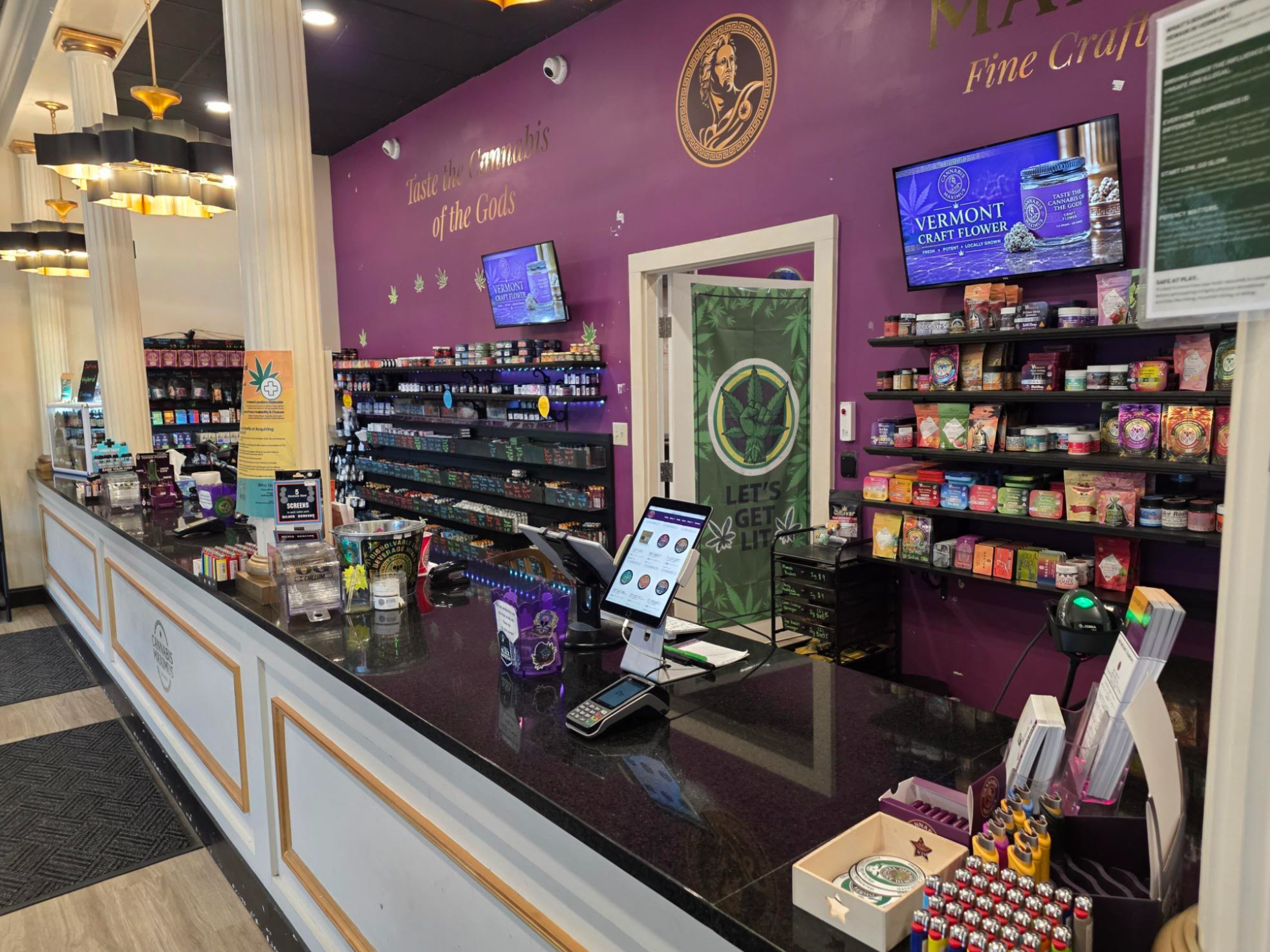
Cannabis Maximus is a family-owned recreational and medical cannabis dispensary in Brattleboro, Vermont, and our team regularly helps customers make sense of cannabinoid information on labels and menus. Here's what shoppers should know about THC, CBD, ratios, potency, and product labels.
What Is THC?
THC, short for tetrahydrocannabinol, is the cannabinoid most commonly associated with the intoxicating effects of cannabis. Cannabis products can contain very different amounts of THC depending on the product type, cultivar, formulation, and serving size.
Because THC is measured differently across product formats, the number you see on a label can take several forms. Understanding which format you are looking at makes it easier to compare products accurately.
You may see THC listed as:
- A percentage on flower or concentrates
- Milligrams per serving on edibles
- Milligrams per package
- Part of a cannabinoid ratio
THC potency matters, but a higher number does not automatically mean a product is a better choice for every shopper.
What Is CBD?
CBD, short for cannabidiol, is another naturally occurring cannabinoid found in cannabis. Unlike THC, CBD is not intoxicating in the same way, which means it does not produce the same kind of "high" associated with THC.
Some cannabis products contain very little CBD, while others may contain a more noticeable amount. You may also see products specifically designed with a combination of THC and CBD in different proportions. CBD is simply one of many compounds that can appear on a cannabis label.
THC vs. CBD: The Basic Difference
THC
- Intoxicating
- Often displayed as a percentage or in milligrams
- Potency can vary widely by product
CBD
- Not intoxicating in the same way as THC
- Can appear alone or alongside THC
- May be listed in milligrams or as part of a ratio
Neither THC nor CBD alone can predict exactly how a person will experience a product. Cannabis contains many compounds, and individual response can vary considerably, so it is best to look at the full picture rather than a single number.
Understanding THC:CBD Ratios
Some cannabis products contain both THC and CBD. When that is the case, you may see a ratio such as 1:1, 2:1, or 5:1, which compares the relative amounts of the two cannabinoids. A 1:1 ratio generally means the product contains similar amounts of THC and CBD, while a higher first number indicates a more THC-dominant product.
The ratio tells you how the cannabinoids compare with one another, but it does not guarantee a specific effect. Customers should still read the actual milligram amounts or percentages on the label to understand what they are purchasing. For more on decoding labels, see our guide on how to read a cannabis product label.
How THC and CBD Are Shown Across Product Types
The way THC and CBD appear on a label depends on the product format. Knowing what to expect from each category can help prevent confusion when comparing options.
Flower
THC and CBD are often shown as percentages on flower packaging. Two flower products with similar THC percentages can still differ significantly in terpene profile, aroma, flavor, genetics, and grower, so potency alone does not tell you everything about the product.
Edibles and Beverages
Cannabinoids are typically listed in milligrams per serving and per package on edibles and cannabis-infused drinks. Serving size and total package amount both matter, and the whole package may not represent a single serving. Always check the number of servings before consuming.
Vapes and Concentrates
Vapes and concentrates can contain much higher cannabinoid concentrations than other formats, which makes reviewing the label especially important. If you are unfamiliar with these products, take time to understand what the numbers mean before purchasing. Our concentrates 101 guide covers the basics.
Why Higher THC Is Not Automatically Better
It is easy to assume that the product with the highest THC percentage is the best option, but that is not necessarily true. Higher THC may produce a more intense intoxicating experience, which may not be appropriate or enjoyable for every consumer, especially those who are newer to cannabis.
When comparing products, it helps to look at several factors together rather than focusing on a single number.
When comparing products, consider:
- THC content
- CBD content
- Product type
- Serving size
- Terpenes
- Personal tolerance
- Aroma and flavor preferences
Potency is only one part of the product, and a well-balanced option may be more enjoyable than one chosen simply for its THC number.
What About Terpenes and Individual Response?
Terpenes are aromatic compounds that contribute to the aroma and flavor of cannabis. They are different from cannabinoids like THC and CBD, and a product's terpene profile can be another useful way to compare options. Common terpenes include limonene, myrcene, pinene, linalool, and caryophyllene. For a deeper look, see our guide to understanding cannabis terpenes.
Personal tolerance, metabolism, previous cannabis experience, and individual body chemistry can all influence how a product feels. No cannabinoid percentage, ratio, terpene, or product category can guarantee exactly how someone will feel, so it is better to use cannabinoid information as a guide rather than a promise.
Shopping Tips for Beginners
If you are new to cannabis or have a low tolerance, starting with a lower-potency product can be a more cautious approach. Take a moment to read the label for THC, CBD, serving size, ratios, and total package potency, and ask questions if anything is unclear. For a more thoughtful approach to choosing products, see our guide on choosing cannabis based on the experience you want.
Useful questions to ask:
- How much THC is in one serving?
- Does this product contain CBD?
- What does this ratio mean?
- Is this considered a higher-potency product?
- How many servings are in the package?
- What terpenes are listed?
Asking better questions usually leads to more useful recommendations than simply looking for the strongest product available.
Shop Cannabis at Cannabis Maximus
Cannabis Maximus is a family-owned recreational and medical cannabis dispensary in Brattleboro, Vermont. We carry a variety of cannabis products with different cannabinoid profiles, potencies, formats, and terpene profiles, and our team can help explain the information available on current products.
Browse our menu before your visit, explore our Product Guide, or check our Location & Hours before stopping by.
Cannabis Maximus — Brattleboro, Vermont.
For adults 21+. Please consume responsibly. Cannabis affects everyone differently. Do not drive or operate a vehicle while impaired. This article is for general educational purposes and is not medical advice.